AR Automation Software: Why Your Collections Need a Voice
Discover how AI voice agents improve accounts receivable automation software, reducing DSO and securing late B2B payments.
On this page
Research shows that addressing late payments could unlock £112 billion in cash flow for small businesses. More than half of all B2B invoiced sales in the United States are paid past their due date. Businesses are now waiting well over a month to receive payment for services already rendered. For the average small to medium-sized business (SMB), this translates to thousands of dollars in outstanding late payments at any given time.
The traditional answer to this problem has been accounts receivable automation software. These tools promise to streamline the collections process by replacing manual spreadsheet tracking with automated workflows. Most of these platforms focus heavily on email reminders, sending out a sequence of "friendly nudges" as an invoice ages. According to Upflow's B2B payment insights, more than half of all B2B invoiced sales are now paid past their due date, highlighting the limitations of email-only approaches.
While email automation was once a major efficiency gain, it is hitting a ceiling of effectiveness. Inboxes are more crowded than ever, and automated dunning emails are increasingly easy for customers to ignore, archive, or filter out.
The Limits of Email-Only AR Automation
Most accounts receivable automation software on the market today functions as an email sequencing tool. You set up a schedule: an email three days before the due date, another on the due date, and then a series of increasingly firm messages every week after that.
This approach works for organized customers who simply forgot to schedule a payment. However, it fails for the customers who cause the most significant drag on your cash flow. These are the debtors who have a dispute, an administrative error, or are intentionally stretching their payables to manage their own liquidity.
An email cannot negotiate. It cannot ask, "Is there a specific reason this hasn't been paid yet?" and it certainly cannot capture a verbal commitment to pay by Friday at 10:00 AM. When email reminders fail, the process usually breaks down into two expensive extremes: manual phone calls from your staff or handing the debt over to a collection agency.
The High Cost of Manual Follow-Up
When the automated emails go unanswered, someone on your team has to pick up the phone. For many SMBs, this is the business owner, a bookkeeper, or a dedicated AR clerk.
Manual collection calls are effective. Industry data shows that phone calls have a significantly higher success rate for securing payment commitments compared to automated email follow-ups. But manual calls are difficult to scale. They are time-consuming, emotionally draining, and often get pushed to the bottom of the to-do list in favor of more "productive" work.
The average SMB spends hours every week chasing late payments. That is nearly two full workdays lost to administrative friction. If your AR automation software stops at the inbox, you are still left with the heaviest lifting.
Closing the Gap with AI Voice Agents
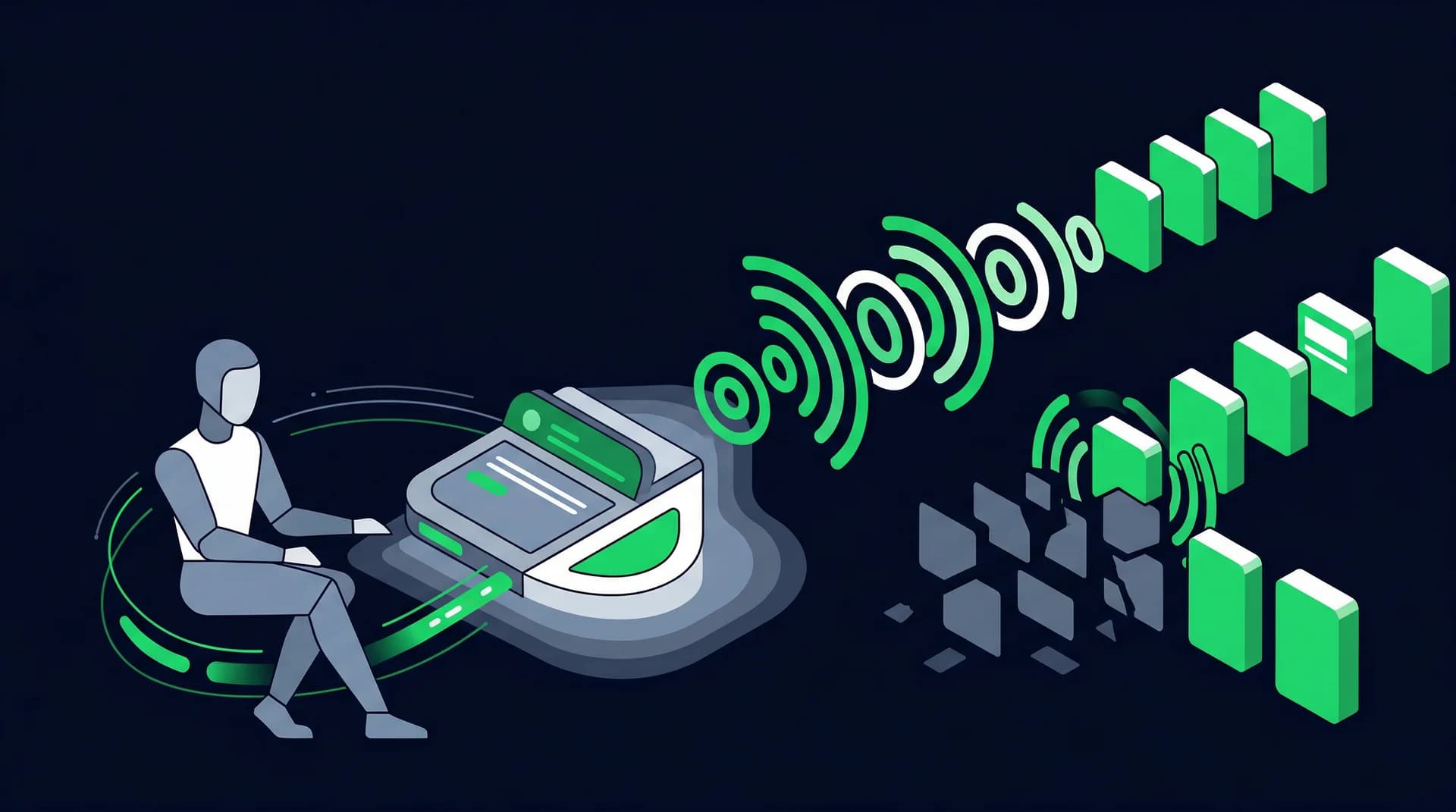
The next generation of accounts receivable automation software is moving beyond the inbox. By integrating AI voice agents into the dunning workflow, businesses can finally automate the most effective part of the collection process: the phone call.
An AI voice agent is not a robocall. It is a sophisticated, conversational system designed to handle the nuances of a B2B collection discussion. When a voice agent like the one built by Dunwise makes a call, it operates as a professional extension of your finance team.
The agent can call every overdue customer the moment an invoice hits a specific aging threshold. Unlike a human clerk, the agent is persistent but always professional. It never has a "bad day," never forgets to follow up, and can handle hundreds of calls simultaneously.
How Voice AI Transforms the Collections Conversation
Integrating voice into your AR automation software changes the dynamic of the collections process in several key ways.
Capturing Structured Outcomes
When a human makes a collection call, the results are often buried in a CRM note or a mental log. "Called John, he said he'll pay soon." This is not data you can act on.
An AI voice agent extracts structured insights from every conversation. It identifies if the customer has a legitimate dispute, such as a missing PO number or a perceived quality issue. It captures specific "Promises to Pay" (PTP), including the exact date and amount promised. This data flows directly back into your reporting, giving you a clear picture of expected cash flow.
Real-Time Resolution
One of the biggest friction points in B2B collections is the "I didn't receive the invoice" excuse. In a traditional workflow, this requires a human to hang up, find the PDF, email it, and then call back a few days later to confirm receipt.
Modern AR automation software with voice capabilities can resolve this in real time. During the call, if a customer asks for the invoice or a payment link, the agent can send it via SMS immediately. The customer can open the link while still on the phone, removing the most common hurdle to payment.
Relationship Preservation
Hiring a collection agency is often seen as the "nuclear option." Agencies take a significant cut of the recovered funds and typically use aggressive tactics that can permanently damage your relationship with the customer.
Using AI voice as part of your first-party AR automation allows you to stay in control of the tone. You can choose a friendly, helpful approach for long-term partners who are just a few days late, and save the firmer, more direct language for chronic late payers. Because the calls are coming from your company, not a third-party debt collector, the customer relationship remains intact.
Choosing the Right AR Automation Software
If you are evaluating accounts receivable automation software for 2026, look for a solution that bridges the gap between digital reminders and human-level conversation.
A complete AR automation stack should include:
- Automated email and SMS reminders for early-stage dunning.
- Conversational AI voice agents for mid-to-late stage collections.
- Real-time data extraction to surface disputes and payment commitments.
- Seamless document integration so the agent has the full context of the invoice and contract.
- A focus on "first-party" collections to keep your customer relationships healthy.
The goal of automation is not just to send more messages. It is to reduce your Days Sales Outstanding (DSO) and free your team from the weekly burden of chasing payments. By giving your AR automation a voice, you can finally close the loop on late invoices without the high cost of manual labor or the relationship risk of a collection agency.
To see how AI voice agents can transform your collections process, book a demo with Dunwise today.